When it's 2am and your socks are wet, where do you go for help?
After 5pm, very few services remain open. In some parts of Tulsa, the nearest shower or shelter can be a four- to five-hour walk. If you're experiencing homelessness at night, your options are almost zero.
We built a machine that changes that.
What It Is
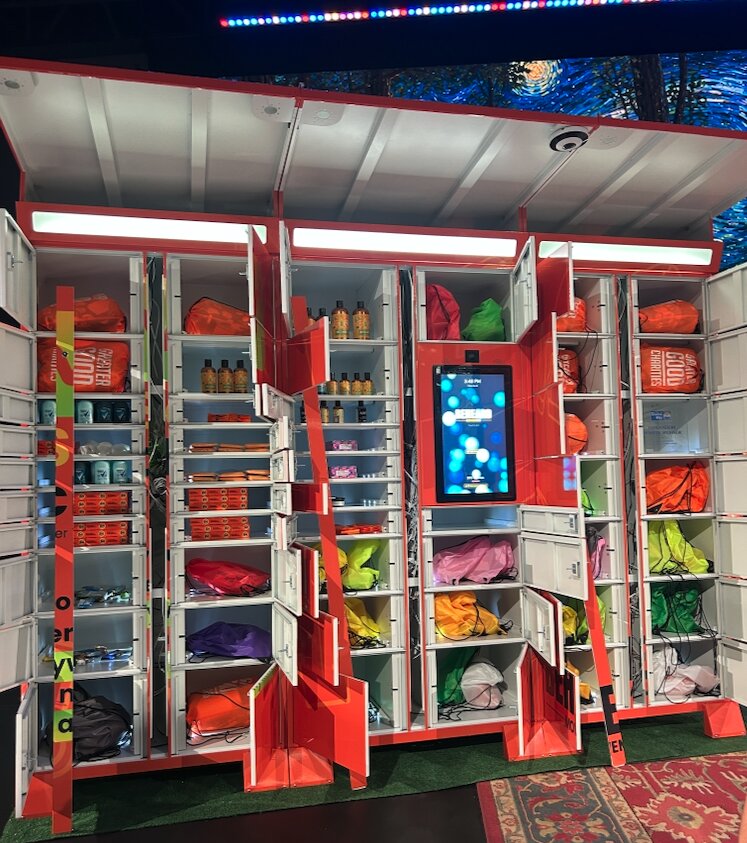
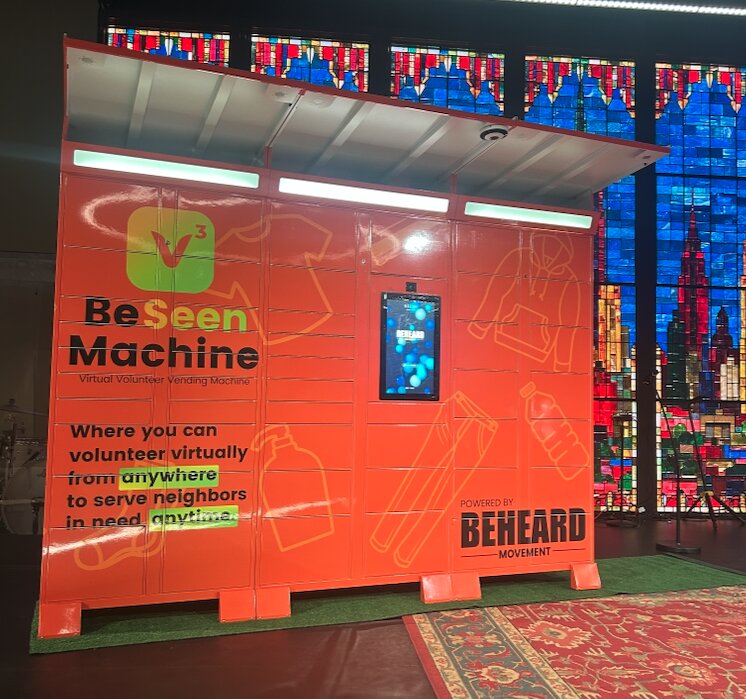
The BeSeen Machine is a locker system with 48–72 compartments, a touchscreen kiosk, and a live video call system. It sits on a wall in an underserved area of Tulsa and operates 24 hours a day, 7 days a week.
A neighbor walks up and taps the screen. A volunteer picks up the call on their phone, like FaceTime. They have a conversation. The volunteer can open locker compartments remotely to dispense whatever's needed: hygiene kits, warm socks, snack packs, first aid supplies, rain ponchos.
They can even open extra compartments as a gesture. "Hey, take some socks too. It's going to be cold tonight."
The volunteer can be anywhere. A woman in Dallas answered a call at 2:17 AM and opened a locker in Tulsa for someone who just needed dry socks. Two people, different cities, one moment of dignity.
That's the "virtual volunteering" part. No scheduling requirements, no location requirements. A volunteer opens their phone and makes an impact from wherever they are.
How Volunteering Works
Volunteers sign up for 1–2 hour shifts. During a shift, you might help 6–10 people. The app rings when someone at the machine needs help. You answer, talk with them, and dispense items, all from your phone.
You could be at home, on a break at work, or sitting in a coffee shop. Pause your moment, help someone through theirs, then return to your day.
Churches and companies can reserve group shifts. A church group in one city hosts a volunteer night and helps neighbors across the country. It's changed how some organizations think about service.
Each machine also needs 7–10 local key volunteers who adopt a day of the week to restock supplies. Training and supplies are provided.
More Than Supplies
The kiosk doesn't just dispense items. Through the touchscreen, neighbors can access local resources, bus routes, 211 services, telehealth connections, and case management information. The machine is a front door to help, not just a locker.
And every interaction is built around respect. No questions, no paperwork, no judgment. Privacy protected. Dignity centered.
The Partnership
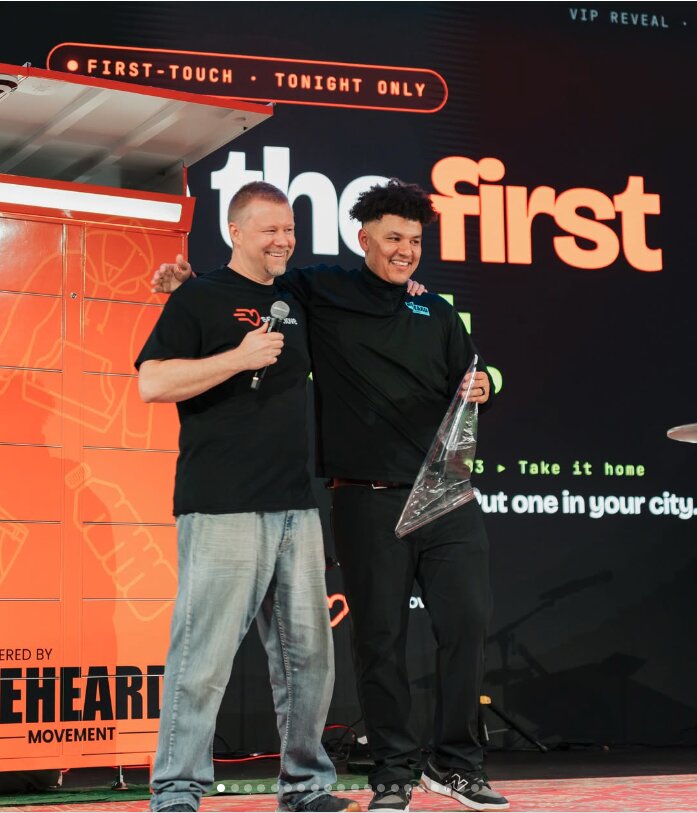
This was a collaboration with BeHeard Movement and Tulsa Area United Way. We won United Way's Social Innovation Grant together, and the People's Choice Award.
BeHeard brought the community relationships and the mission. They've been doing frontline work with people experiencing homelessness in Tulsa for years. They knew what was needed. We brought the engineering: custom smart lockers with electronic locks, the kiosk software, the live video call system with real-time translation, and the volunteer management platform that schedules shifts and routes calls.
The Tech
Under the hood: the kiosk runs on a custom platform built by Serve.Love. When a neighbor taps the screen, the system initiates a live WebRTC video call and routes it to the next available volunteer through our call routing system. The call includes real-time transcription and translation: a Spanish-speaking neighbor and an English-speaking volunteer can have a natural conversation, with captions and text-to-speech handling the language bridge.
Volunteers control the locker compartments remotely through the call interface. Each compartment has an electronic lock that can be triggered from the volunteer's phone. The system tracks inventory, logs interactions, and manages the volunteer shift schedule.
Everything is built to work at 2 AM with no staff on site.
What's Next
BeHeard Movement is planning to expand to additional cities. The machine and the platform are designed for it: each new location gets its own machine, its own local restocking team, and access to the same pool of virtual volunteers.
If you're interested in bringing a BeSeen Machine to your community, visit beseencollective.org or talk to us about the technology.
The overall goal is simple: to give neighbors a fighting chance to make it through the night.
Justin Daniels, Founder, Serve.Love