The value of a volunteer hour in 2026 varies by state, based on local wage averages and labor market conditions. As of 2026, the estimated national hourly value of volunteering is $34.79, according to the Independent Sector's annual calculation. This figure uses Bureau of Labor Statistics (BLS) salary data plus a 15% estimate for benefits and taxes.

Calculate Your State's Volunteer Rate
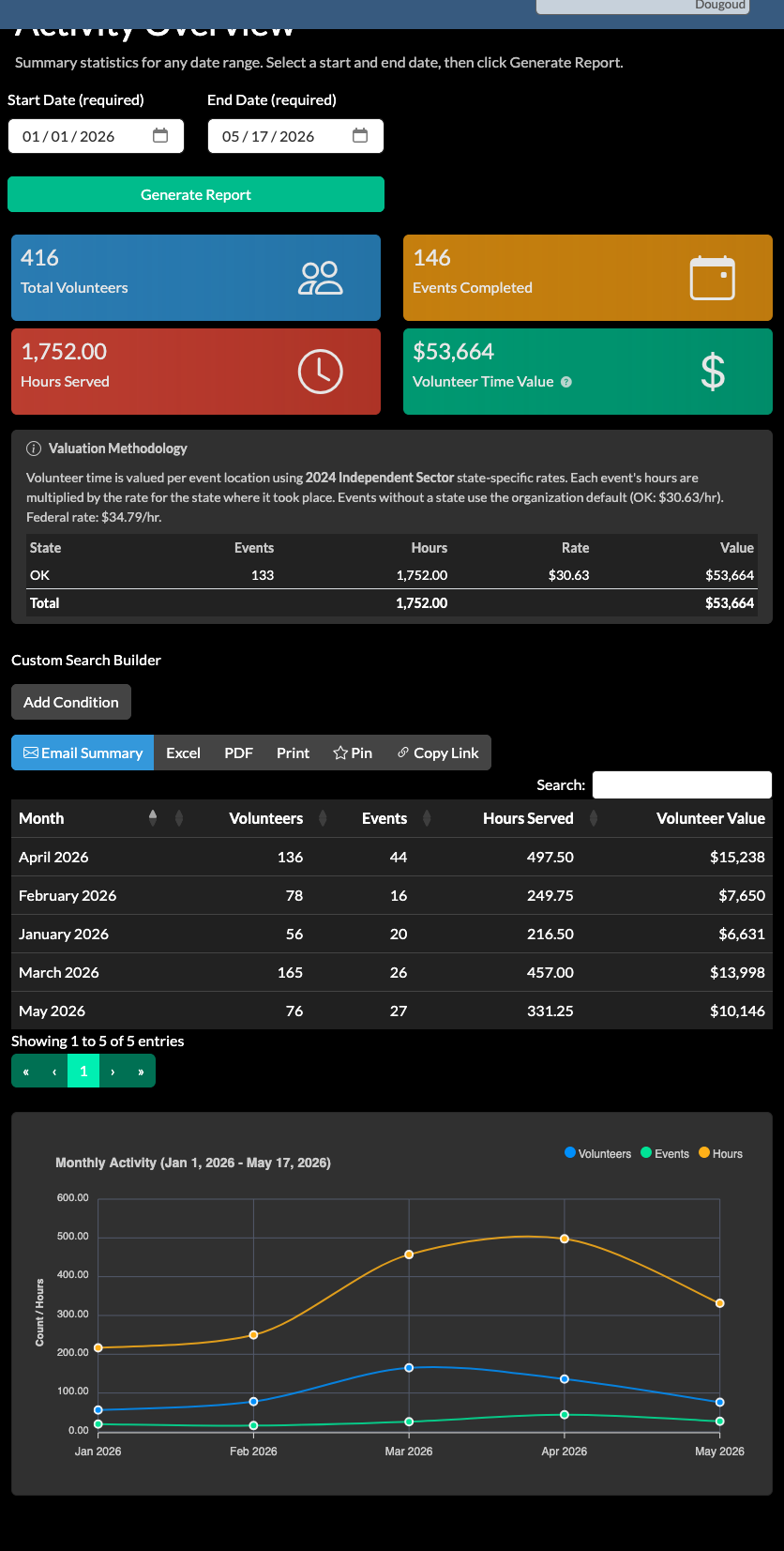
Geofenced check-in auto-logs volunteer hours and calculates their dollar equivalent in real time. All values appear on your team's dashboard.
If your organization needs help tracking and valuing volunteer contributions, try our free trial.
The Basic Formula for Calculating Volunteer Hour Value
To determine the financial impact of your volunteers' efforts, organizations often apply a standard valuation model used across grants and reports. It typically involves three steps:
- Determine the average hourly wage for similar roles in your region;
- Add a 15% buffer for employer-provided benefits;
- Multiply the result by the number of volunteered hours.
This method aligns with guidance from major funders who consider volunteer time as part of an in-kind match. For instance, the National Institute on Aging recommends applying locally adjusted rates when calculating social return on investment.
How Grant Reviewers Evaluate Volunteer Contributions
Funders want clarity and consistency in measuring volunteer effort. They look for two things:
- Rationale Behind the Valuation
- You should explain which benchmark was used (such as the Independent Sector rate).
- Auditable Data Trail
- Show they have access to accurate logging through features like mobile check-in and geofencing.
Grant proposals benefit from including specific examples of past projects measured against known benchmarks. That builds credibility and helps reviewers understand the true scope of your impact.
Why States Have Different Rates
Varying regional cost-of-living indices mean different states assign different economic weights to unpaid service. Here's a snapshot of expected ranges in 2026:
| State | Estimated Value/Hour |
|---|---|
| New York | $38.22 |
| Texas | $33.11 |
| California | $39.45 |
| Illinois | $35.60 |
| Florida | $32.18 |
| Pennsylvania | $34.90 |
Using Volunteer Metrics in Grant Applications – Good vs Weak Examples
Here's how strong language looks compared to weaker alternatives:
"The staff-led event management initiative involved over 200 volunteers contributing approximately 1,500 hours, valued at around $52,185 based on the 2026 Independent Sector national average."
"Our group did some good stuff last week. We had several helpers, though we're not sure how many hours were spent."
Strong descriptions give precise numbers, cite clear standards, and connect activities to measurable outcomes. Weak ones lack specificity and imply uncertainty.
Key Takeaways
- The independent sector sets the baseline for estimating volunteer hour value annually.
- Regional adjustments reflect differences in living costs and professional wages.
- Automated logging provides accurate dashboards tied to up-to-date formulas.
- Include audit trails in proposals—the clearer the math, the better chance of approval.
- Cite actual figures instead of general statements ("many" or "some") in grant submissions.
No formal U.S. government mandate defines volunteer hour value—but agencies like FEMA and the Corporation for National and Community Service recommend referencing the Independent Sector's standard for planning purposes.
Your organization can define internal thresholds, but external auditors usually require alignment with recognized industry benchmarks. Compliance while streamlining calculations is essential.
In-kind matches generally require quantifiable equivalents. When presenting volunteer time, attaching a dollar amount increases transparency and meets funder expectations.
Yes—if the hours meet accepted definitions of active engagement. Teams can distinguish between remote tasks and onsite duties during logging, ensuring accuracy across hybrid models.
Check the latest publication from the Independent Sector, or use platforms that integrate real-time updates and geographic filters into their analytics suite.
Yes, especially if staffing levels changed or operations expanded. Recalculations ensure ongoing relevance for future funding rounds and performance reviews.
Have documentation ready—including screenshots from your volunteer-tracking software—that verify timestamps and locations. Native export options make sharing with stakeholders or evaluators easy.
Additional Resources
- Independent Sector - Volunteer Time Cash Value: Official guide to understanding how the cash-equivalent of a volunteer hour is determined yearly.
- U.S. Bureau of Labor Statistics: Regional salary statistics form the basis of most modern volunteer valuation methods.
- Features Page: See how geofenced check-ins and real-time reporting integrate into project evaluations.
Contact us to learn how automated tracking validates volunteer hours—from mobile check-ins to detailed state-level summaries. Try it risk-free with our free demo account.