Volunteer Management for Hospitals and Hospices That Have to Get the Details Right
Healthcare volunteering carries a compliance baseline most other programs don't face: background checks before day one, required training before a volunteer enters a clinical area, documented hours for accreditation, and a coordinator who is responsible if any of that slips. The tools most volunteer coordinators inherit (spreadsheets, paper intake forms, a shared email inbox) are not built for this. Here's how a hospital or hospice volunteer program is set up on Serve.Love.
Where Healthcare Volunteer Coordinators Spend Time They Shouldn't
The work isn't matching volunteers to shifts. It's proving that every person on that floor had the right clearances before they walked in.
Intake that actually collects what compliance requires
A basic sign-up form isn't enough. You need background-check consent, health clearance attestation, required training acknowledgment, and, for some roles, proof of vaccination or TB screening. Chasing that paperwork by email, one volunteer at a time, is work the intake form should be doing.
Role-based shift restrictions aren't optional
Not every volunteer can work every area. A new auxiliary volunteer who hasn't cleared training shouldn't be able to sign up for a patient-contact role. In a spreadsheet, that restriction lives in the coordinator's head. In a system, it's enforced before sign-up is confirmed.
Hours reporting is a compliance requirement, not a preference
Hospital auxiliary programs often have minimum service-hour requirements. Hospice programs document volunteer hours under Medicare Conditions of Participation. Accreditation reviewers ask for records. When those records are scattered across emails and manual tallies, the coordinator is the one assembling them the week the auditor arrives.
How a Healthcare Volunteer Program Is Set Up on Serve.Love
Three steps. Compliance infrastructure built in, not bolted on.
Custom intake forms collect background-check consent, clearances, and required fields before anyone is scheduled
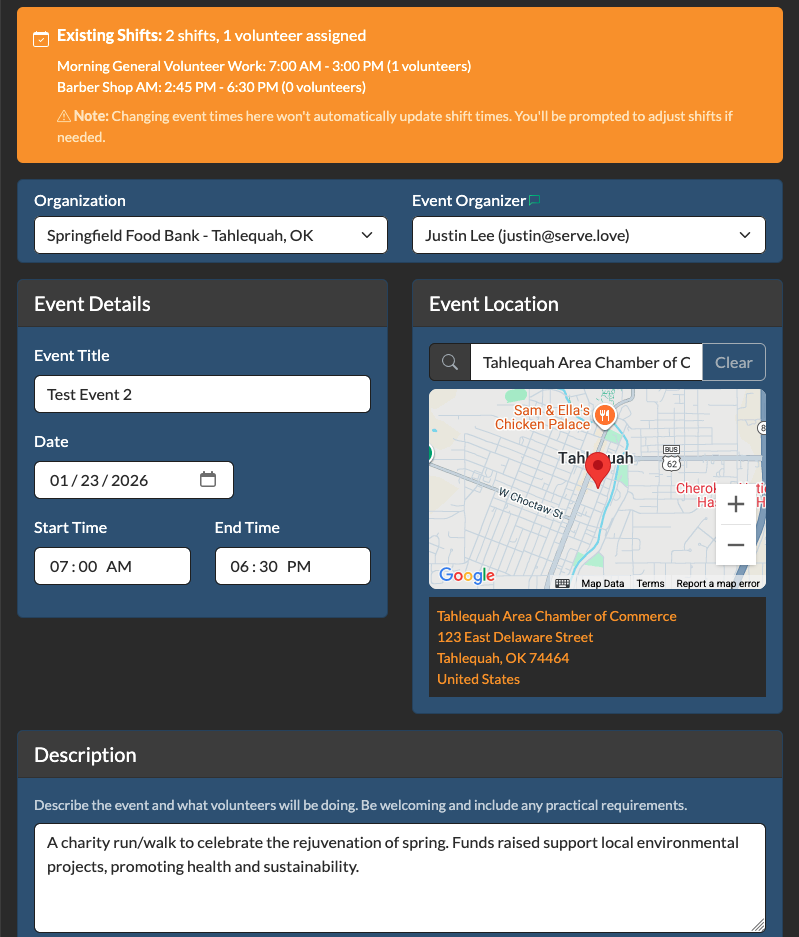
When a prospective volunteer applies, the intake form collects exactly what your program requires: consent to background screening, health attestation, training acknowledgment, role preferences. Coordinator-managed credentialing status marks each volunteer cleared, pending, or restricted. No one who is pending can be scheduled for a role that requires clearance.
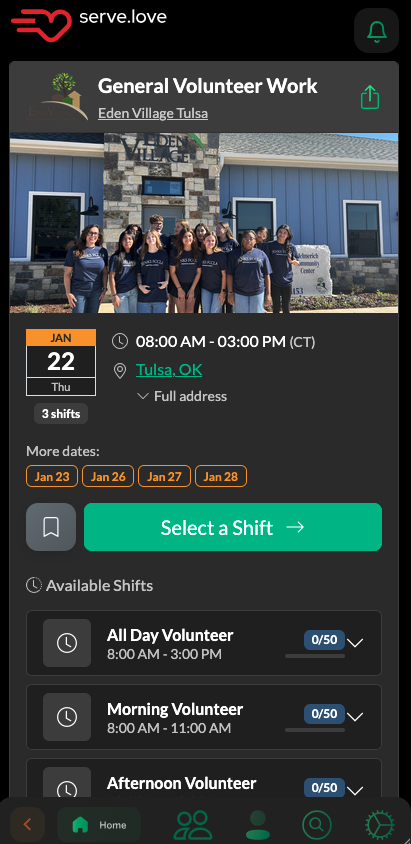
Role-based recurring shifts: volunteers sign up for what they're cleared for
Create your recurring shift schedule (department by department, role by role) and publish it. Volunteers see only the roles available to them based on their clearance status. Reminders go out automatically before each shift so no-shows are the exception, not the rule.
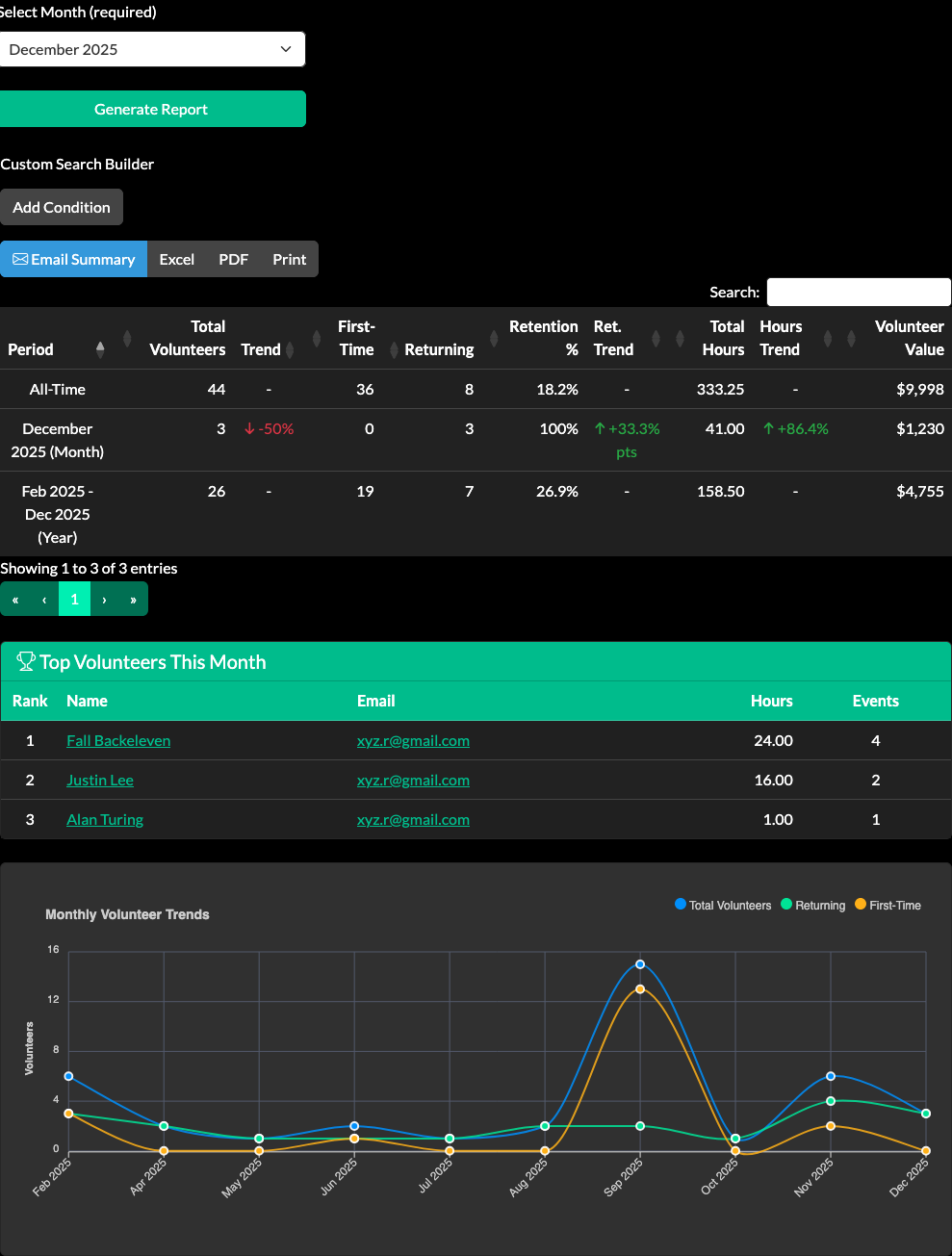
Check-in logs hours automatically: accreditation exports in under two minutes
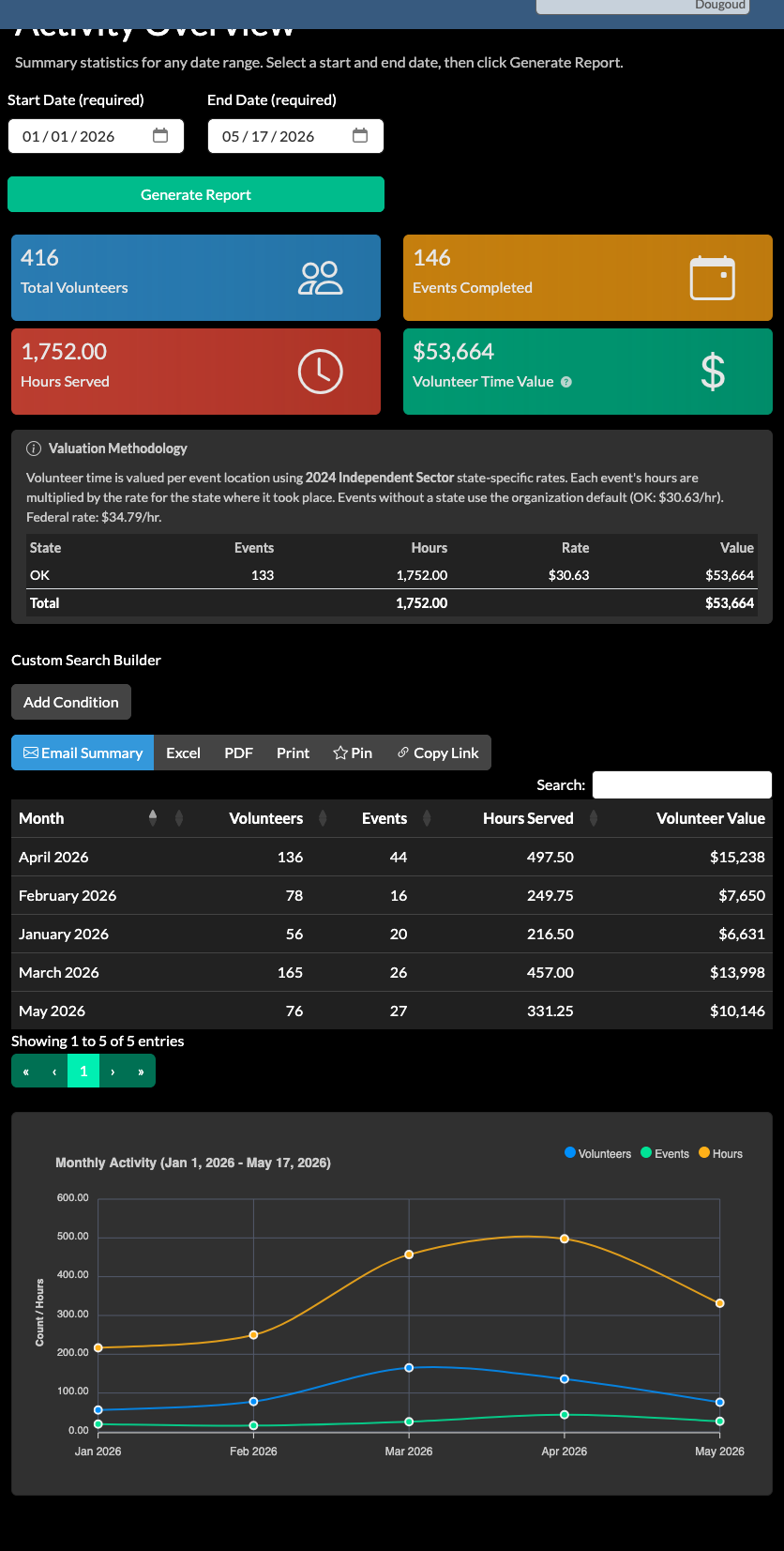
Volunteers check in by scanning a QR code or you mark them present. Hours accumulate in their record automatically. At month end, you pull a summary by volunteer, by department, or by date range. When the accreditation reviewer asks for documentation, it's ready, not assembled the night before.
Honest Framing: What Serve.Love Does and Doesn't Do for Healthcare Programs
We don't have a named hospital client to point to yet. What we do have is a platform built around the infrastructure that makes healthcare volunteer programs work: custom intake forms that collect what compliance requires, credentialing status controls that enforce role restrictions before sign-up, recurring shift scheduling, and automatic hour tracking with exportable reports.
What Serve.Love does not do: run background checks directly. It tracks and displays each volunteer's background-check status, works alongside your existing screening vendor, and ensures only cleared volunteers can access restricted roles. If your program requires a specific credentialing workflow your current vendor runs, Serve.Love is the coordination and documentation layer, not the screening vendor itself.
The honest pitch is this: if your current system is a spreadsheet and an email inbox, and your coordinator is the one keeping it all from falling apart, there is a better way. The setup is done for you, not handed to you as a login and a knowledge base. Most programs are live with a fully configured intake, shift schedule, and check-in system within 30 days.
If you run a healthcare volunteer program and want to see how the setup looks for your specific requirements, a 20-minute call is the fastest way to find out whether it fits.
The Compliance Gap Nobody Sees Until the Auditor Does
In healthcare volunteering, the documentation problem isn't hypothetical. It shows up during accreditation reviews, grant audits, and the week your department head asks for a service-hour summary the coordinator doesn't have on hand. Every shift where hours weren't logged, every volunteer who was scheduled before their background check cleared, every intake form that got filed in someone's email, those are gaps that close the moment you have a system tracking them. The cost of running this manually isn't just the coordinator's time. It's the credibility of your program when the documentation isn't there.
Questions We Hear
See How It's Configured for Healthcare Programs
We'll walk through intake, credentialing controls, shift scheduling, and hours reporting in 20 minutes, tailored to what your compliance requirements actually are.
Book a Free 20-Minute Call See PricingFree forever • No setup fee • No credit card