Parent Volunteer Sign-Up That Doesn't Live in Someone's Inbox
Every school has willing parents. Getting them signed up, cleared if the campus requires it, reminded before the event, and documented for a grant report, that's the part that falls on one PTA officer or school liaison who is already doing three other things. When the system for managing parent volunteers is a shared spreadsheet and a group chat, the coordinator is the system. Here's how a school volunteer program is set up on Serve.Love.
Where School Volunteer Coordinators Lose Time
The bottleneck isn't enthusiasm. Parents want to help. The bottleneck is the infrastructure that doesn't exist.
Sign-up scattered across channels nobody checks
The event goes in the newsletter, the Facebook group, the school app, and a text to the homeroom parents. Some people see it. Most don't register until someone nudges them. The coordinator ends up chasing confirmations by hand for every single event, every single time.
Grant reports assembled from whatever's left over
Afterschool programs, Title I schools, and community grants often require documented volunteer hours as match funding. When attendance is tracked on a sign-in sheet that may or may not have made it to the office, the coordinator is reconstructing the record from memory at the end of the semester.
How a School Volunteer Program Is Set Up on Serve.Love
Three steps. Parent intake handled. Hours tracked automatically. Reports ready when you need them.
Parent sign-up collects background-check consent and required forms, before they're scheduled
Create your volunteer onboarding form once: name, contact info, background-check consent, any required acknowledgments or agreements. Parents fill it out when they register, not at the door, not in a separate email, not on paper that gets lost in the car. Coordinator-managed clearance status tracks who is ready for campus-access roles and who is still pending.
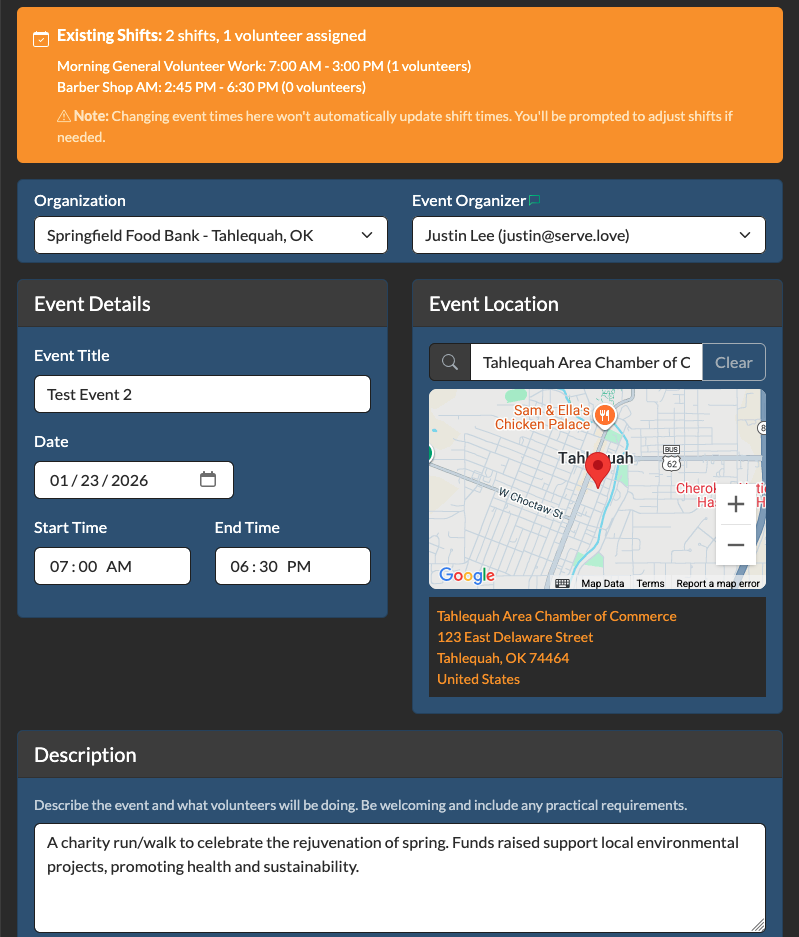
Recurring events, shared links, automatic reminders: sign-up happens without you running it
Publish your event calendar (field day, classroom reading, carpool shifts, fundraising nights) and share the link through whatever channels you already use. Parents register from their phone, no account required. Reminders go out automatically before each event. When they stop getting no-shows, coordinators usually mention it first.
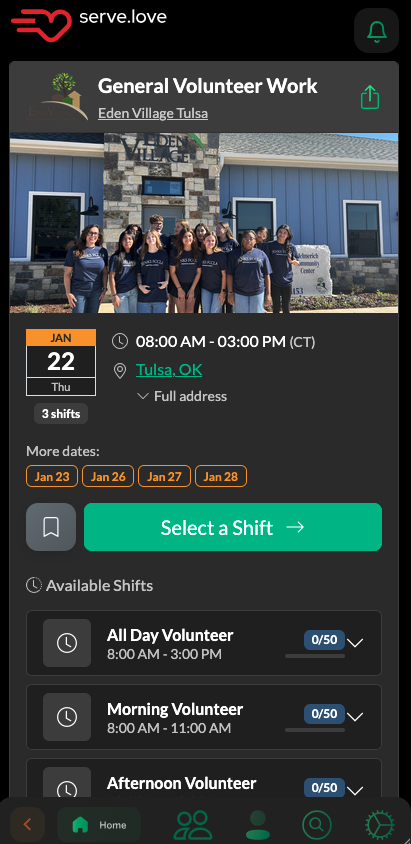
QR-code check-in tracks attendance automatically: grant reports ready in under two minutes
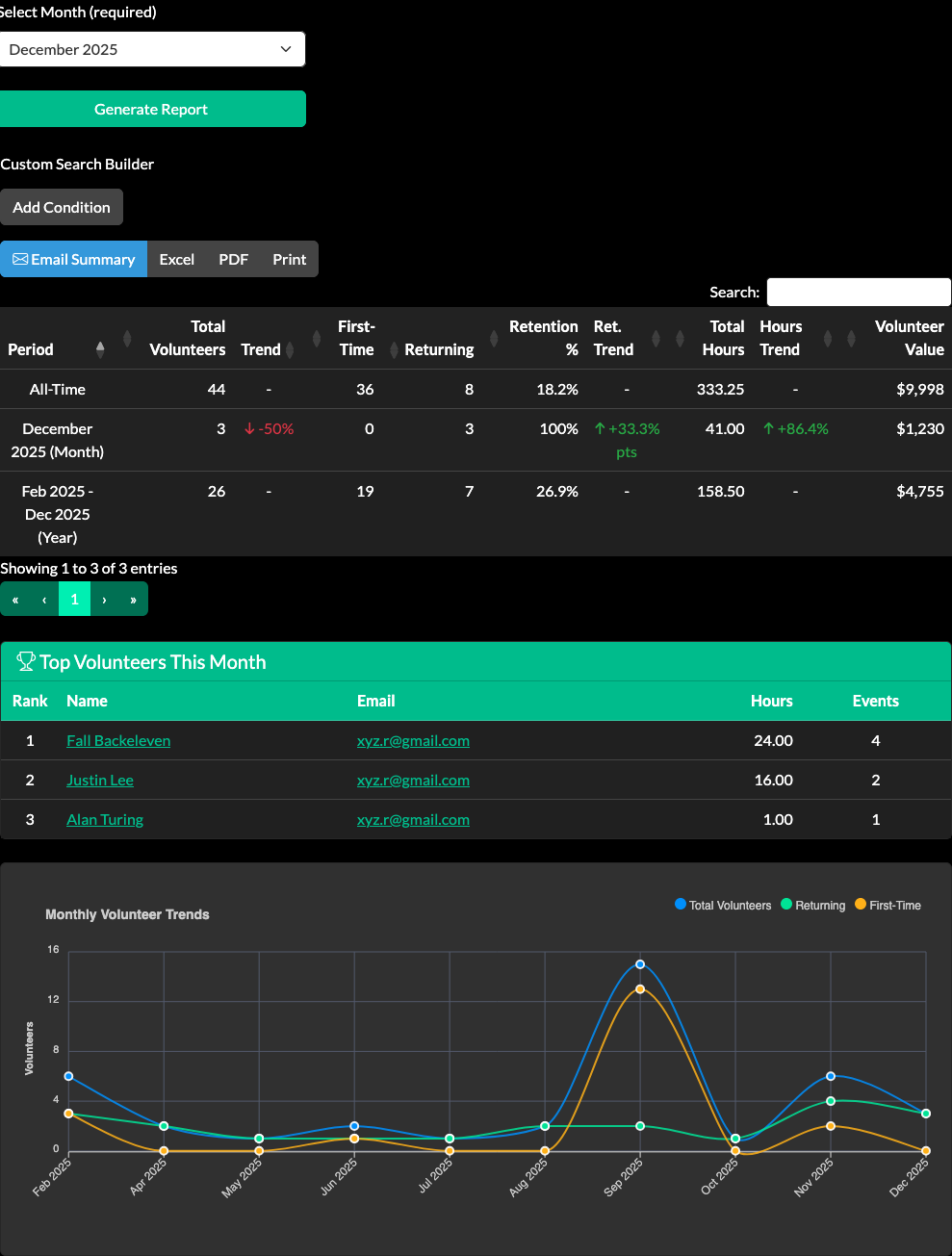
Parents check in by scanning a QR code at the event, or you mark them present in the admin view. Hours are logged. At the end of the semester, pull a report by volunteer, by event, or by date range. If a grant auditor asks for documented volunteer hours, you export it before they finish the question.
What This Looks Like When It's Running
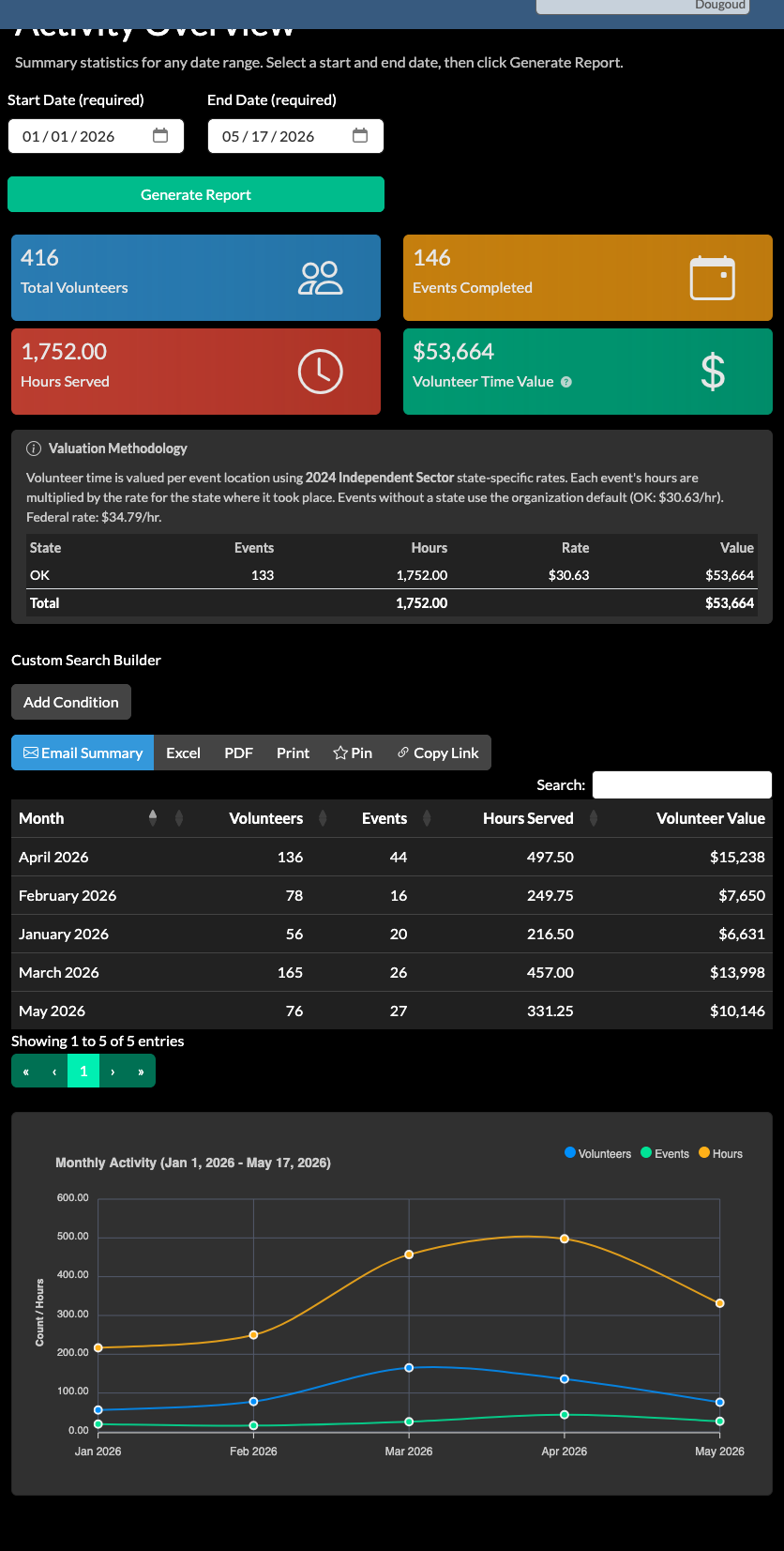
We don't have a named school client to point to. What we can show you is how a school program is typically configured, and what changes once it's running.
A school program on Serve.Love usually starts with two things: a parent intake form that collects the clearance consent and any required agreements, and a recurring event calendar for the semester. Once those are live, the sign-up link gets shared through whatever channels the school already uses. Parents register. Reminders go out automatically. Check-in on event day takes about 30 seconds per volunteer.
The change coordinators notice first isn't usually the hours report. It's the reminder cycle. When parents get an automatic reminder two days before the event, the no-show rate drops. When they get a thank-you note after, the repeat rate goes up. That's not a product feature. It's what consistent communication does when you're not doing it by hand.
The hours report becomes relevant the first time a grant requires documentation. At that point, the coordinator opens a date-range filter, exports the summary, and sends it. The schools that don't have a system do it by reconstructing from memory and paper sign-in sheets. The difference is auditable hours vs. estimated ones.
What It Costs to Keep Running This Out of Someone's Inbox
The PTA officer managing parent volunteers on a shared spreadsheet and a group text is doing a job that has a real cost: her time, her goodwill, and eventually her willingness to keep doing it. When that person steps back, the program usually goes with her because it all lived in her head. The grant that required volunteer hour documentation doesn't get renewed because the records weren't kept. The parent who was willing to help twice a month doesn't come back because nobody followed up. The cost of not having a system isn't a line item. It's the program that shrinks without anyone deciding to shrink it.
Questions We Hear
Set Up Your School's Volunteer Program Right
We'll configure parent intake, your event calendar, and check-in in under 30 days, so the next time a grant asks for volunteer hour documentation, you have it.
Book a Free 20-Minute Call See PricingFree forever • No setup fee • No credit card